Adding an electric vehicle (EV) charger at home is one of the best upgrades you can make for convenience, efficiency, and long-term savings. But with different charger types, electrical requirements, and installation considerations, choosing the right one can feel overwhelming — especially for first-time EV owners.
This guide breaks the decision down into clear, practical steps to help Ontario homeowners choose the EV charger that fits their driving habits, home electrical system, and budget.
Decide Between Level 1 and Level 2 Charging
Most EV owners quickly outgrow the basic Level 1 charger that comes with their vehicle. Here’s how to know which level is right for your home:
Level 1 (120V)
- Uses a standard household outlet
- Adds roughly 6–8 km of range per hour
- Works for plug-in hybrids or very low daily driving distances
- Slowest option; often not practical for full EVs
Level 2 (240V)
- Adds 30–45 km of range per hour depending on charger and vehicle
- Best for daily commuting or overnight charging
- Requires a 240V circuit—similar to an electric dryer or stove
- Most recommended option for full EV owners
For most EV drivers in Eastern Ontario, a Level 2 charger is the ideal long-term choice.
Determine Whether You Need a Panel Upgrade
Not every home has enough remaining electrical capacity to support a Level 2 charger. Before installing one, a licensed electrician evaluates:
- Your main service size (usually 100A, 125A, or 200A)
- Existing load on the panel
- Future growth — heat pumps, hot tubs, or renovations
- Whether load management devices can avoid a panel upgrade
With smart load-sharing devices now available, many homeowners can install an EV charger without a full service upgrade. A licensed electrical contractor can tell you which option fits your home.
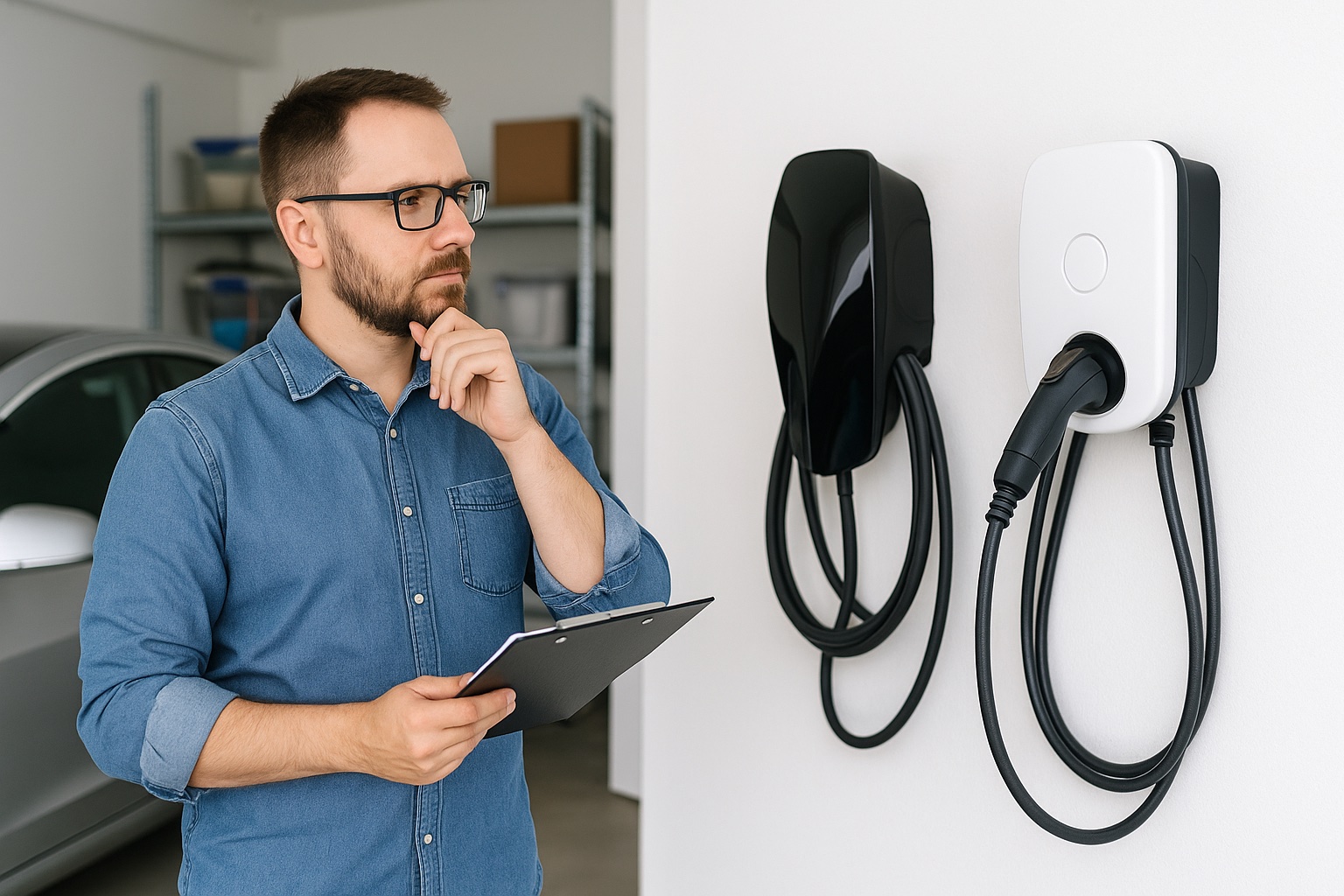
Choose Between Plug-In or Hardwired Chargers
EV chargers come in two installation styles, each with pros and cons:
Plug-In (NEMA 14-50 or 6-50)
- Easier installation
- Charger can be replaced or upgraded easily
- Suitable for garages or sheltered outdoor locations
- May require a new 240V receptacle
Hardwired
- Permanently installed — best for outdoor setups
- Often required for higher amperage output
- Fewer failure points in cold or damp conditions
- Considered more durable overall
In Ontario’s climate, outdoor chargers are often hardwired for reliability.
Pick the Smart Features You Want
Modern EV chargers come with optional “smart” functionality. Depending on your lifestyle, these features may be worth the extra cost:
- Wi-Fi or Bluetooth app control
- Scheduled charging (useful if time-of-use rates change again)
- Real-time energy monitoring
- Load management (very helpful on smaller panels)
- Compatibility with solar or home batteries
- Driver profiles for multiple vehicles
Smart chargers are increasingly popular because they make charging predictable, trackable, and energy-efficient.
Understand the Charger Standards: J1772, CCS, and Tesla’s NACS
Most home chargers in North America use the J1772 connector for non-Tesla vehicles. Tesla uses its own connector, now called NACS (North American Charging Standard).
Here’s the important part: many major automakers are switching to the Tesla NACS standard beginning in 2025–2026, but early adopters will use adapters in the meantime.
- Tesla owners can use any Tesla Wall Connector, plus J1772 chargers with an adapter.
- Most other EV owners can use J1772 chargers or a NACS charger with an adapter.
- Future-proofing: Many homeowners choose NACS-compatible chargers today to avoid upgrading later.
This transition is good news — it will simplify charging for everyone down the road.
Consider Your Home Layout and Charging Habits
The best charger for your home depends on where the cable can reach and how you typically park. A licensed electrician will look at:
- Garage or outdoor installation
- Distance from the panel (affects installation cost)
- Cable length needed
- Winter conditions and protection from the elements
- Whether you plan to own multiple EVs
A good installation makes charging simple, convenient, and safe year-round.
Professional Installation Matters
Unlike plug-in appliances, a Level 2 EV charger is considered a permanent electrical upgrade. In Ontario, it must be installed by a licensed electrical contractor and may require an inspection by the ESA.
Professional installation ensures:
- proper breaker sizing
- correct wire gauge and safe routing
- weather-appropriate mounting
- code-compliant installation
- future-proof circuit design for additional loads
Ready to Install Your Home EV Charger?
Whether you’re buying your first EV or upgrading your current charging setup, choosing the right charger — and installing it properly — makes all the difference.
Smart Electric Services / Eco Alternative Energy provides professional EV charger installations across Eastern Ontario, including Tesla Wall Connectors, J1772 chargers, smart chargers, and load-management solutions.
Not sure what charger you need? Contact our team and we’ll help you choose the best setup for your home, budget, and driving habits.