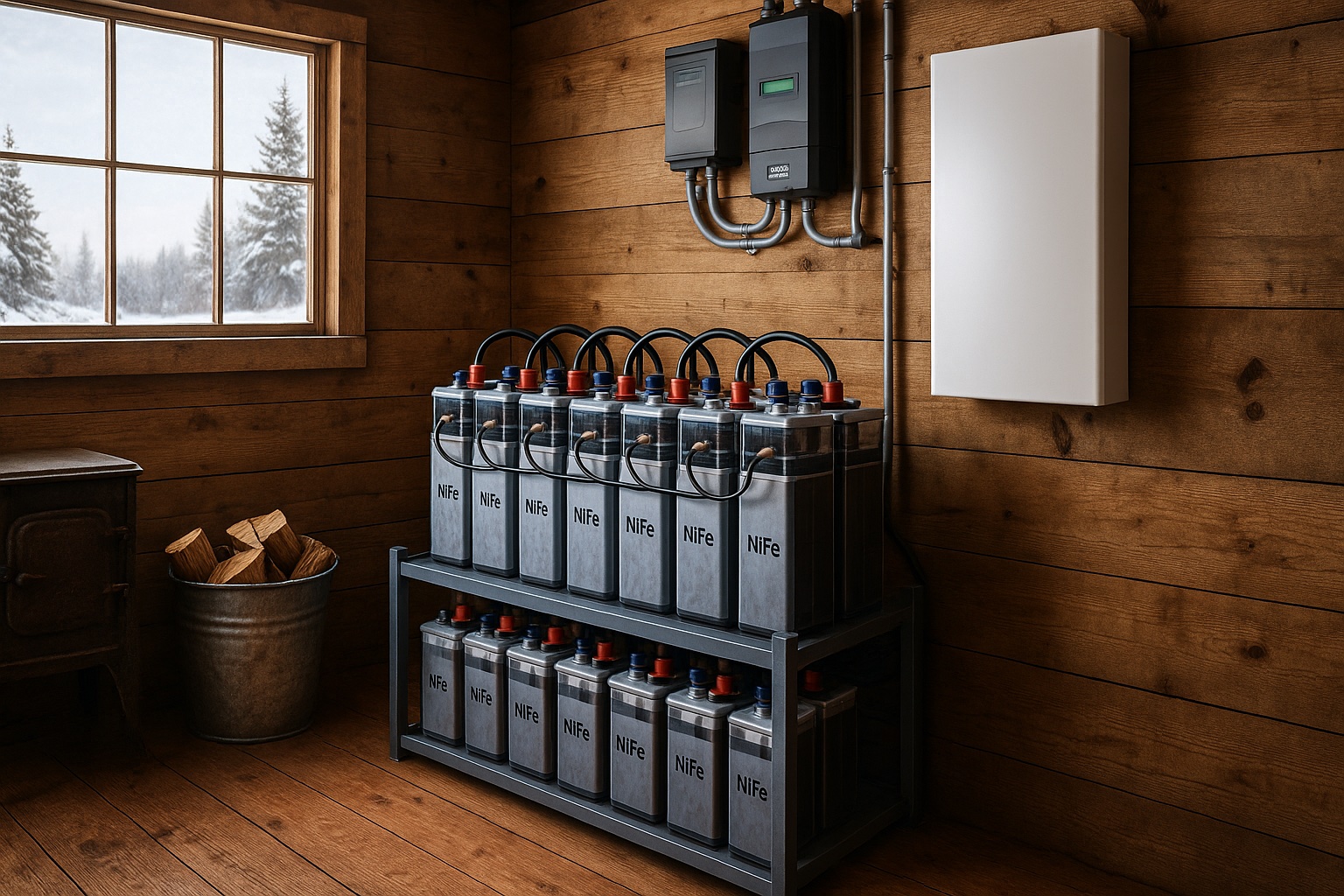
Edison batteries — also known as nickel-iron (NiFe) batteries — are one of the oldest rechargeable battery technologies in existence. Invented by Thomas Edison in the early 1900s, these batteries are rugged, extremely durable, and capable of lasting decades. Today, they’re seeing renewed interest among off-grid enthusiasts, preppers, and long-term energy storage fans. But are they really a better option than modern lithium-ion systems?
This article explores how Edison batteries work, why they’re experiencing a comeback, and whether they’re a practical choice for homeowners in Eastern Ontario — especially those considering off-grid or hybrid solar systems.
What Makes Edison Batteries Unique?
Edison batteries use a combination of nickel oxide hydroxide and iron electrodes submerged in an alkaline electrolyte. Their chemistry is incredibly stable and resilient, giving them characteristics that modern lithium-ion batteries simply cannot match.
- Ultra-long lifespan: 20–50+ years with minimal degradation.
- Highly durable: Resistant to overcharging, deep discharging, temperature extremes, and electrical abuse.
- Environmentally friendly: Made from non-toxic materials (iron, nickel, potassium hydroxide).
- Low fire risk: Unlike lithium batteries, NiFe cells don’t undergo thermal runaway.
These attributes make Edison batteries appealing for remote cabins, farms, workshops, and resilience-focused off-grid systems.
The Downsides: What You Should Know Before Choosing NiFe
Despite their durability, Edison batteries come with significant trade-offs — which is why they are not ideal for most grid-tied Ontario homes.
- Low efficiency (60–70%) — meaning more energy is wasted as heat.
- High self-discharge — they lose charge over time when not in use.
- Large size & heavy weight — require substantial space and strong flooring.
- High upfront cost — often more expensive than lithium systems, especially per kWh of usable energy.
- Maintenance required — electrolyte levels must be checked and occasionally replenished.
Because of these limitations, most Ontario homeowners will still be better served by lithium-ion options like Tesla Powerwall, Enphase batteries, or other modern storage systems designed for grid interaction and backup power.
Why Edison Batteries Appeal to Off-Grid and Prepper Communities
For long-term resilience and independence, NiFe batteries offer unmatched longevity. Their ability to withstand deep discharge, harsh temperatures, and abuse makes them ideal for:
- Remote cabins and cottages
- Homesteads with winter solar challenges
- Preppers seeking decades-long reliability
- Workshops or barns where temperature varies widely
- Systems with irregular charging patterns (solar/wind)
Edison batteries are especially useful in environments where maintenance is acceptable but long-term durability is essential.
Edison vs. Modern Lithium Batteries: Which Is Better?
For typical homeowners in Eastern Ontario, lithium-ion batteries remain the best choice. They are compact, efficient, low-maintenance, and fully compatible with grid-tied solar and backup systems.
| Feature | Edison (NiFe) | Lithium-ion |
|---|---|---|
| Lifespan | 20–50+ years | 10–15 years |
| Efficiency | Low (60–70%) | High (90–95%) |
| Maintenance | Moderate | Low |
| Size/Weight | Very large/heavy | Compact/light |
| Cost per kWh | High | Moderate |
| Best Application | Off-grid, resilience, long-term cycling | Grid-tied homes, backup, load shifting |
For off-grid systems, the choice depends on usage patterns, climate, and budget. In some niche cases, NiFe may provide better long-term value despite lower efficiency.
Is an Edison Battery Right for Your Property?
An Edison battery might be worth considering if you:
- Plan to live fully off-grid for decades
- Prioritize durability over efficiency
- Have space for a large battery bank
- Don’t mind basic maintenance
- Want an extremely long-lasting, abuse-resistant system
However, most grid-connected Ontario homes will see better performance, lower costs, and easier integration with a lithium-ion solution.
Future Outlook: Will Edison Batteries Become Mainstream Again?
Although Edison batteries won’t replace lithium systems for the average homeowner, their popularity is growing in resilience-focused and off-grid markets. Modern refinements have improved cycle life, reduced maintenance, and made them more accessible — but they still remain a niche technology.
For Ontario customers seeking reliability in harsh winters, NiFe systems remain an interesting option — but not the most practical or cost-effective for typical electrical storage needs.
Considering Off-Grid Power or Battery Storage?
If you’re exploring off-grid solutions, battery storage options, or a renewable energy setup for your home or cottage, our team can help you understand the pros and cons of every system — including Edison batteries, lithium solutions, and hybrid designs.
Contact Smart Electric Services today for expert guidance on designing the right power system for your needs.