As electricity costs rise and grid reliability becomes an increasing concern, many Ontario homeowners and businesses are exploring renewable and alternative energy technologies. These solutions not only help reduce long-term energy expenses but can also improve resilience during power outages and extreme weather events. This article provides a high-level overview of the most practical technologies currently available in Eastern Ontario, with future articles exploring each option in greater detail.
Solar Photovoltaic (PV) Systems
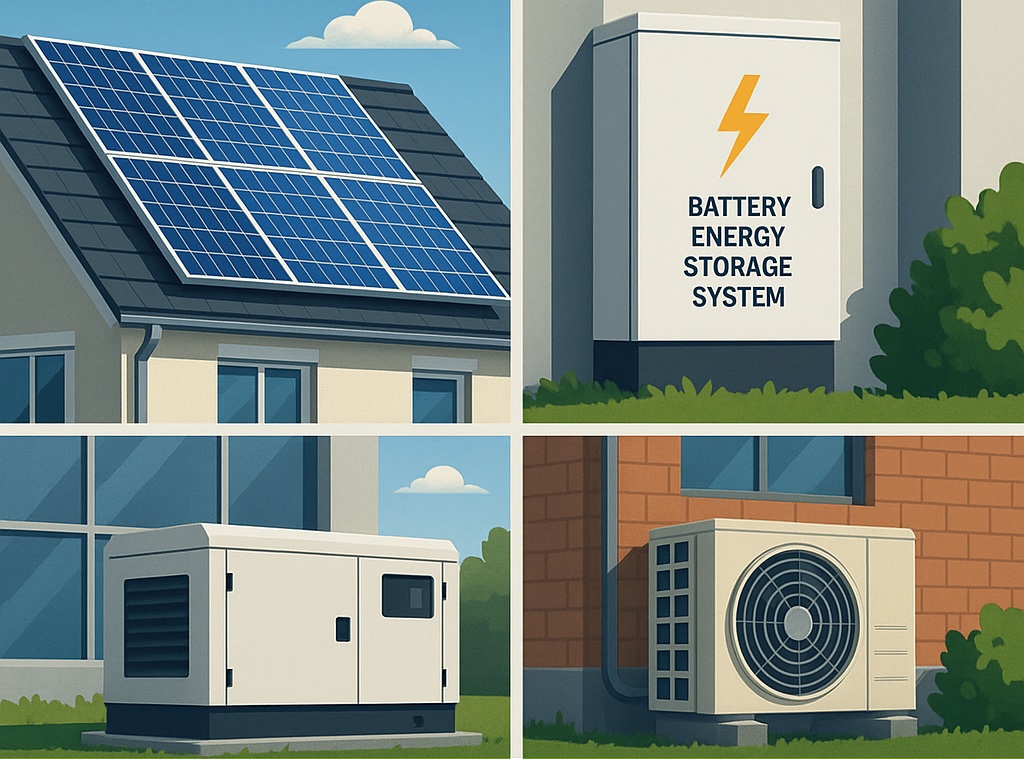
Solar photovoltaic systems convert sunlight into electricity using roof-mounted or ground-mounted panels. In Ontario, solar PV is one of the most widely adopted renewable technologies due to its scalability, falling equipment costs, and compatibility with both residential and commercial buildings.
Solar systems can offset a significant portion of daytime electricity usage and can be designed for grid-tied, hybrid, or off-grid operation. When paired with energy storage, solar PV can continue supplying power during outages, helping homes and businesses maintain essential operations even when the grid is unavailable.
Battery Energy Storage Systems
Battery energy storage systems store electricity for later use, typically charging from the grid or from on-site renewable generation such as solar panels. These systems allow users to shift energy usage, reduce peak demand, and provide backup power during grid outages.
Modern lithium-ion battery systems are compact, efficient, and capable of automatically supplying power to selected circuits when an outage occurs. For businesses, battery storage can help protect sensitive equipment, reduce downtime, and support critical infrastructure during power interruptions.
Hybrid Solar and Battery Systems
Hybrid systems combine solar PV with battery storage, offering both energy cost savings and enhanced resilience. These systems can prioritize self-consumption of solar energy, store excess production, and seamlessly transition to backup power during outages.
In Ontario, hybrid systems are particularly well suited for properties looking to reduce reliance on the grid without fully disconnecting from it. They provide flexibility, allowing owners to adapt their energy strategy as usage patterns, rates, or technologies evolve.
Backup Generators (Natural Gas, Propane, or Diesel)
Backup generators remain a common resilience solution for both residential and commercial properties. These systems automatically start during a power outage and can supply electricity for extended periods, depending on fuel availability.
While generators do not reduce electricity costs directly, they play a critical role in energy resilience. Many property owners choose to integrate generators with renewable and battery systems, using generators as a secondary or extended-duration backup when outages last longer than battery capacity alone can support.
Heat Pumps (Air-Source and Ground-Source)
Heat pumps provide heating and cooling by transferring heat rather than generating it through combustion. Air-source heat pumps extract heat from outdoor air, while ground-source (geothermal) systems draw heat from the earth, offering higher efficiency in colder conditions.
When paired with renewable electricity, heat pumps can significantly reduce energy costs and dependence on fossil fuels. During outages, heat pumps can be supported by battery storage or generators to maintain indoor comfort and protect buildings from freezing temperatures.
Small-Scale Wind Turbines
Small-scale wind turbines generate electricity by capturing kinetic energy from wind and converting it into usable power. In Ontario, these systems are most practical for rural properties, farms, and commercial sites with open land and consistent wind exposure. When properly sited, wind turbines can supplement grid power or operate alongside solar systems to provide more balanced year-round energy production.
Wind systems can improve resilience by producing energy during periods when solar output is low, such as during cloudy winter conditions. However, successful installations require careful assessment of zoning rules, setback requirements, tower height restrictions, and long-term wind data to ensure performance justifies the investment.
Biomass & Pellet Heating Systems
Biomass and pellet heating systems use organic materials—such as wood pellets, agricultural waste, or other renewable biofuels—to produce heat for space heating and hot water. These systems are commonly used in rural homes, commercial buildings, and agricultural operations where fuel storage space and delivery access are available.
Modern biomass systems are far more efficient and cleaner-burning than traditional wood stoves, offering automated fuel feeding and precise temperature control. While they do not eliminate reliance on fuel delivery, biomass systems can reduce exposure to electricity and fossil fuel price volatility and continue operating during electrical outages when paired with appropriate backup power for controls.
Micro-Hydro Power Systems
Micro-hydro systems generate electricity by harnessing the flow of water from streams, rivers, or controlled water sources on a property. Unlike solar or wind, hydro systems can produce consistent power 24 hours a day, making them one of the most reliable renewable energy sources where site conditions allow.
In Ontario, micro-hydro installations are highly site-specific and subject to environmental regulations, permitting, and water rights considerations. For qualifying properties, however, micro-hydro can significantly reduce grid dependence and provide continuous power during outages, especially when integrated into a hybrid energy system.
Solar Thermal Systems
Solar thermal systems use sunlight to heat water or air directly, rather than generating electricity. These systems are commonly used for domestic hot water, space heating support, and commercial applications such as pools or process heating. Solar thermal can reduce energy demand on electric or gas water heaters, lowering overall utility costs.
While solar thermal systems do not provide electricity during outages, they can improve overall energy efficiency and reduce load on backup power systems. In Ontario’s climate, solar thermal is often most effective when paired with high-efficiency storage tanks and complementary heating technologies such as heat pumps or biomass systems.
Combined Heat and Power (CHP) Systems
Combined Heat and Power systems generate electricity on-site while capturing waste heat for space heating or hot water. These systems are most commonly used in commercial, industrial, or multi-unit residential buildings with consistent energy demand.
CHP systems improve overall energy efficiency and can continue operating independently of the grid when designed for islanding. For businesses, this can provide a stable energy supply during outages while reducing overall energy costs.
Microgrids and Energy Management Systems
Microgrids are localized energy networks that can operate independently or in coordination with the main electrical grid. They often combine multiple energy sources such as solar, batteries, generators, and controllable loads.
Advanced energy management systems optimize how energy is generated, stored, and consumed within a microgrid. For commercial sites, farms, and critical facilities, microgrids offer enhanced resilience, improved reliability, and long-term cost control.
EV Chargers as Energy Assets
Electric vehicle chargers are increasingly being viewed as part of a broader energy ecosystem. Smart chargers can schedule charging during off-peak hours, integrate with solar production, and reduce strain on electrical infrastructure.
Emerging vehicle-to-home and vehicle-to-building technologies may allow electric vehicles to supply power back to a building during outages. As adoption grows, EVs have the potential to become a valuable component of resilient energy systems in Ontario.
Building Efficiency and Load Reduction Technologies
Energy-efficient lighting, insulation improvements, smart thermostats, and advanced controls play a critical role in reducing overall energy demand. Lower energy consumption directly translates to smaller renewable systems and longer backup runtimes during outages.
For both homes and businesses, improving efficiency is often the most cost-effective first step toward energy resilience. These technologies complement renewable generation and storage by ensuring that available power is used as effectively as possible.
As Ontario’s energy landscape continues to evolve, a thoughtful combination of these technologies can help property owners reduce costs, improve sustainability, and maintain power when it matters most. Future articles will explore each option in more detail, including system design considerations and real-world use cases.
Planning Your Energy Strategy?
Every home and business is different. The right combination of renewable energy, backup power, and efficiency upgrades depends on how your building is used, how critical uninterrupted power is, and what your long-term goals are.
As a family-run electrical contractor serving Eastern Ontario, we help property owners understand their options, avoid unnecessary upgrades, and plan systems that make sense today and into the future.
If you’re considering solar, battery storage, backup generators, EV charging, or other energy upgrades — or simply want to understand what’s possible — we’re happy to help you explore your options.
Contact us to start a conversation about building a safer, more resilient energy setup for your home or business.