Our Approach
Every property, electrical system, and project comes with its own set of challenges. At Smart Electric Services, we approach electrical work with a focus on safety, planning, and long-term reliability—rather than one-size-fits-all solutions.
Whether the work involves a service upgrade, backup power planning, solar integration, or general electrical improvements, our goal is to help clients make informed decisions based on how their systems are actually used today and how they may evolve in the future.
Guiding Principles
- Safety and code compliance first: Electrical work must meet current safety standards and inspection requirements—without shortcuts.
- Planning before installation: Understanding the existing system helps avoid surprises and supports better long-term outcomes.
- Clear communication: We explain options, limitations, and trade-offs so clients can make confident decisions.
- Practical solutions: Systems are designed to meet real needs without unnecessary complexity or overbuilding.
- Future-ready thinking: Where possible, we consider how today’s work can support future upgrades.
How Projects Are Typically Approached
While every project is different, most electrical work involves some combination of the following steps. The exact scope and sequence depend on the property, the type of work being done, and the systems involved.
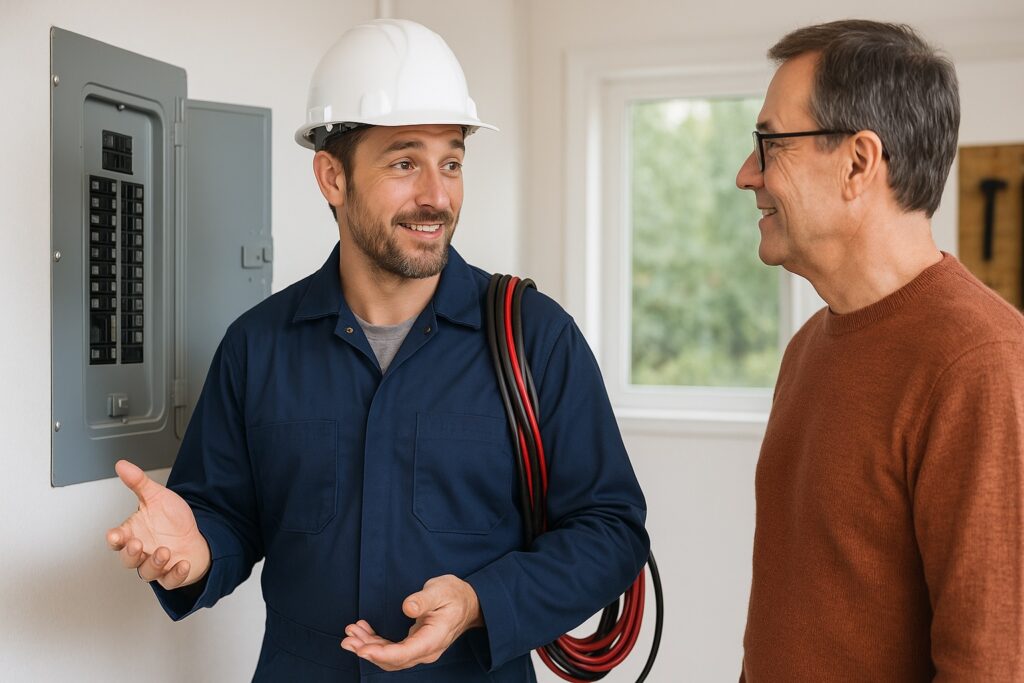
- Initial discussion: Understanding goals, concerns, and any future plans that may affect the electrical system.
- Site review: Evaluating the existing panel, service, wiring condition, and space constraints.
- Load and capacity considerations: Assessing how current and planned loads interact with service limits.
- Options and recommendations: Discussing practical paths forward, including trade-offs and priorities.
- Installation and verification: Completing work safely, clearly labeling changes, and confirming proper operation.
Key Considerations We Commonly Review
Depending on the type of project, we often review a range of technical and practical considerations. These are not fixed checklists, but common factors that help guide safe and effective electrical planning.
General Electrical Work
- Panel condition, labeling, and available space
- Service size and overall capacity
- Existing load patterns and usage habits
- Grounding and bonding methods
- Condition of existing wiring and connections
- Opportunities to improve safety or organization
Solar & Battery Projects
- Panel capacity and backfeed considerations
- Integration with existing loads and future expansion
- Net metering compatibility and system layout
- Equipment placement, ventilation, and access
- Electrical readiness for hybrid or battery-supported systems
Backup Power & Generator Planning
- Identification of critical loads
- Transfer switch or interlock options
- Fuel availability and runtime expectations
- Interaction with pumps, heating systems, and essential equipment
- Safe operation, labeling, and code requirements
EV Charging
- Service capacity and demand impact
- Charging speed needs and usage patterns
- Load management or future vehicle planning
- Charger location, cable routing, and accessibility
Why This Approach Matters
Electrical systems are foundational to safety, comfort, and reliability. Taking the time to understand how a system is used—and how it may change—helps reduce future limitations, improve resilience, and avoid unnecessary rework.
By focusing on planning and communication, we aim to deliver electrical solutions that make sense today and remain adaptable tomorrow.
If you’re considering electrical upgrades, backup power, or future energy systems, a thoughtful approach can make all the difference. We’re happy to discuss options, answer questions, and help clarify what’s practical for your property. Give Us A Call