Electrical Panels & Capacity
Thinking about adding an EV charger, solar, backup power, a heat pump, or a new workshop circuit? In many Ontario homes—especially older homes and rural properties—the first question is whether the existing electrical service and panel can safely support the added demand.
This page explains what “capacity” really means, when an upgrade may be needed, and how we help homeowners and businesses plan safe, code-compliant electrical improvements that support today’s needs and tomorrow’s options.
What “Capacity” Means in Practical Terms
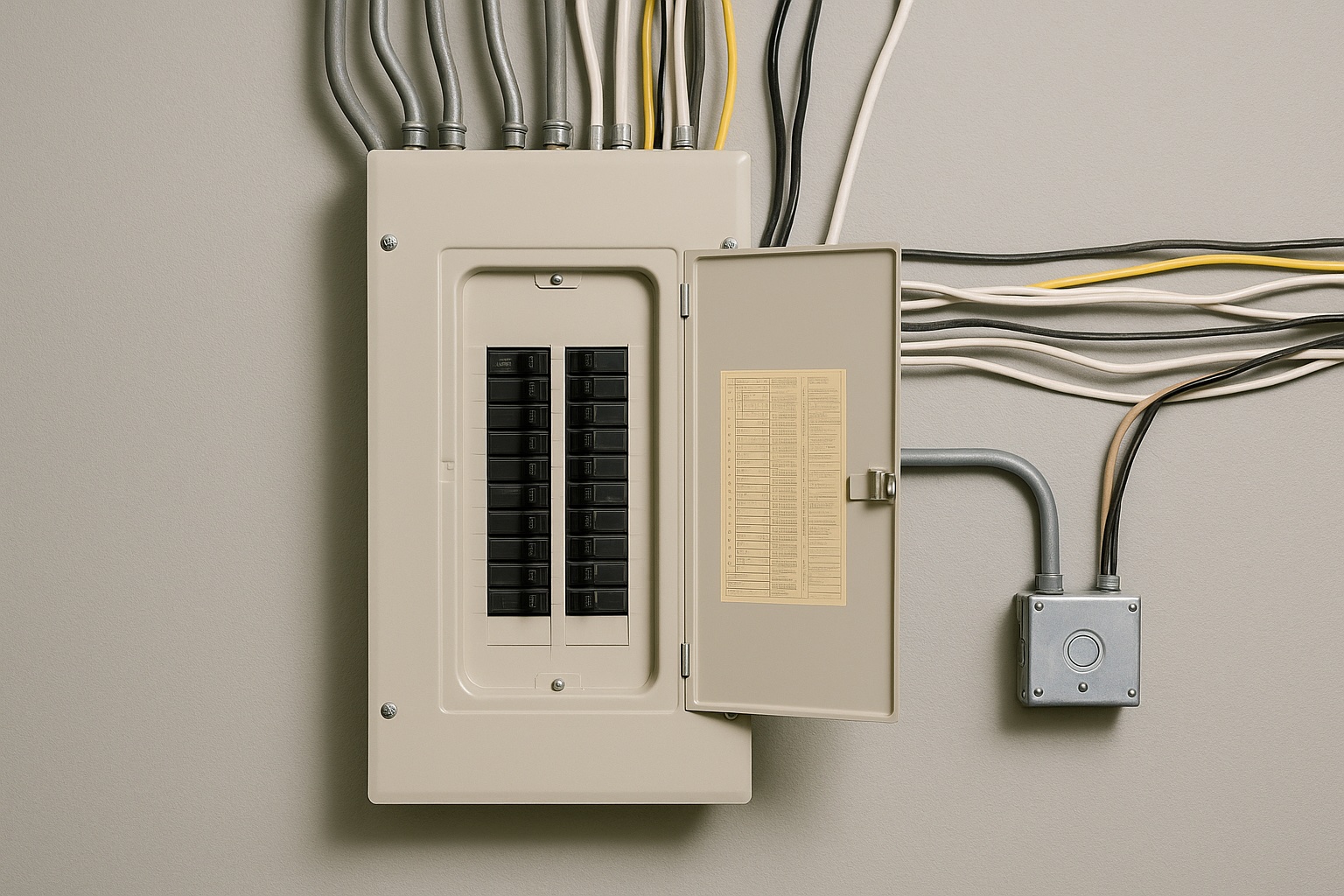
Electrical capacity is the amount of power your service and panel can safely deliver based on your service size (for example 100A or 200A), panel configuration, existing loads, and how those loads are used. Capacity isn’t just “how many breaker spaces are left”—it’s about safety, performance, and compliance when new equipment is added.
A proper capacity review looks at both your current setup and your future plans, so upgrades are done strategically rather than reactively.
Common Signs You May Need a Panel or Service Upgrade
- You’re planning an EV charger, solar, battery backup, generator, heat pump, hot tub, or major renovation.
- Your panel is full or has limited breaker space, leaving no room for new circuits.
- Breakers trip frequently or lights dim when large loads start (a sign of load stress or wiring issues).
- You have an older panel or older electrical infrastructure that may not suit modern loads.
- You want to improve safety, reliability, and future readiness before adding new technology.
What We Can Help With
Panels & Capacity work typically includes a mix of assessment, planning, and installation. Depending on the property, this may involve:
- Load and capacity review to understand what your system can safely support.
- Panel replacements to modernize equipment, improve reliability, or add breaker space.
- Service upgrades (where appropriate) to support higher electrical demand.
- Sub-panels for workshops, additions, garages, and outbuildings.
- Critical-load planning to prioritize essential circuits for backup power strategies.
- Solar-ready or generator-ready preparation so future additions are easier and safer.
Typical Scenarios We See
EV Charging Readiness
EV chargers can add a meaningful new load. A capacity review helps determine whether your panel and service can support charging safely, and whether load management or upgrades are the best path forward.
Solar & Battery Preparation
Solar and battery systems work best when the electrical foundation is planned correctly. Panel condition, breaker space, and integration requirements all affect how smoothly a solar or hybrid project can be implemented.
Backup Power for Rural Properties
Generators and batteries are most effective when critical loads are clearly defined and wired appropriately. Many rural homes also rely on pumps and essential equipment that benefit from careful circuit planning.
Workshops, Farms & Outbuildings
Adding power to a shop or outbuilding can involve long runs, sub-panels, and higher-demand tools. Capacity planning ensures the main panel and service can support these additions safely and reliably.
Our Approach
- Listen first: We start with what you’re planning now and what you might add later (EV, solar, backup, renovations).
- Assess the system: We review your panel, service, and load considerations to understand constraints and opportunities.
- Recommend practical options: In some cases a panel replacement is enough; in others, service upgrades or load management may be the better long-term solution.
- Keep it code-compliant: Work is planned and completed with safety, inspections, and long-term reliability in mind.
Why This Matters for Safety
When new electrical loads are added without proper planning, the result can be nuisance tripping, overheating, unreliable performance, or unsafe workarounds. A capacity-first approach helps ensure your upgrades remain safe, functional, and aligned with electrical code requirements.
Frequently Asked Questions
Do I always need a service upgrade to add an EV charger or solar?
Not always. It depends on your existing service size, current loads, and how the new equipment will be used. In some cases, smarter circuit planning or load management can reduce or delay the need for upgrades.
Is “panel full” the same as “no capacity”?
Not necessarily. A panel can be physically full (no breaker spaces) but still have available service capacity, or it can have spaces available but be close to its practical load limits. Both factors matter.
Can you plan for future upgrades even if we’re only doing one step now?
Yes. Many projects work best when the first step is designed to support later additions—such as solar readiness, generator readiness, or EV expansion.
Ready to Plan Your Next Upgrade?
If you’re considering new electrical loads or want to understand what your system can safely support, we can help you assess your current setup and plan a practical path forward. The goal is a safe, reliable system that supports your property today—and stays flexible for the future.