Backup Power
Power outages are a reality in many parts of Ontario—especially in rural areas where wind, ice, and falling trees can mean longer restoration times. A well-planned backup power setup helps protect your home or business from disruption by keeping essential systems running when the grid goes down.
This page provides an overview of common backup power options and how we help property owners plan safe, code-compliant solutions that match their needs, priorities, and budget.
Start With a Simple Question: What Needs to Keep Running?
The best backup power systems begin with load planning. Most people don’t need to power everything—just the essentials that keep the property safe and functional. For rural homes, “critical loads” often include equipment that city homes rarely think about.
- Water and drainage: well pump, sump pump, septic or lift pumps (where applicable)
- Heating support: furnace blower, boiler pumps, thermostats, circulation systems
- Food safety: refrigerator and freezer
- Connectivity and work: internet equipment, computers, phone charging
- Safety and comfort: select lighting, garage door, security systems
Once critical loads are clear, it becomes much easier to choose the right backup method and size the system appropriately.
Backup Power Options
There are several ways to provide backup power. The right choice depends on outage frequency and duration, fuel availability, noise tolerance, electrical capacity, and what you need to keep running.
Standby Generators
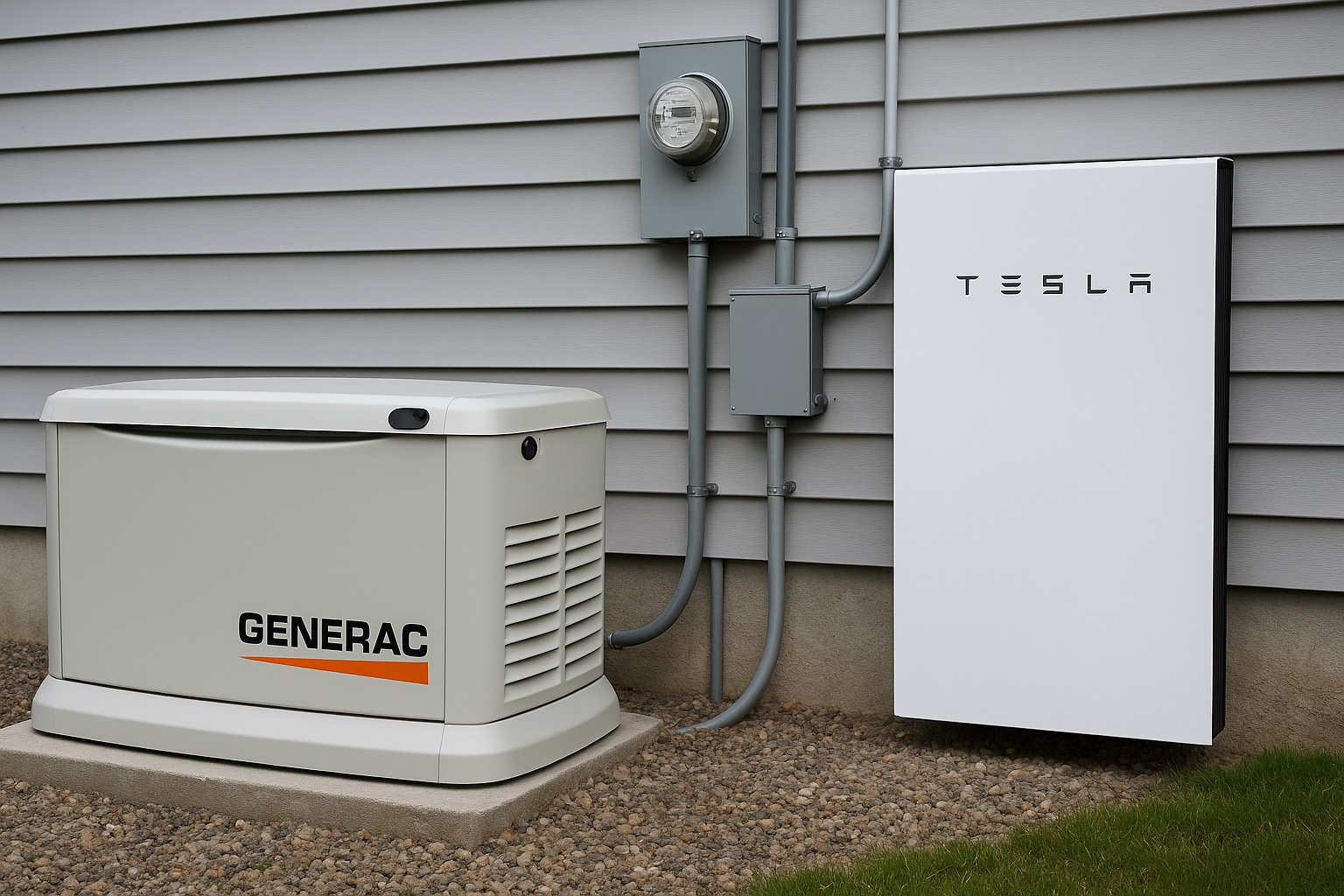
Standby generators are permanently installed systems that start automatically during an outage. They can support a wide range of loads depending on size and design, making them a strong option for homes or businesses where outages are frequent or extended.
These systems are typically paired with an automatic transfer switch and are ideal when you want seamless operation without manual setup.
Portable Generators
Portable generators can be a cost-effective backup option when used safely. They are typically manual systems and may be best suited for powering selected loads during outages rather than running an entire property.
Safe integration matters. Proper transfer equipment and planning can help reduce risk and ensure the generator is used effectively when it’s needed most.
Battery Backup Systems
Battery backup systems store electricity and supply power quietly during an outage. Batteries can be configured to support critical circuits and can be paired with solar or grid charging. They are especially useful for maintaining connectivity, lighting, and other low-to-moderate loads.
For many properties, batteries provide clean and silent backup for essential circuits, with a generator used as a secondary option for longer outages if needed.
Hybrid Backup Planning
Hybrid setups combine technologies—often batteries plus a generator, and sometimes solar—so the system stays flexible. Batteries can handle quiet, continuous loads while the generator is used strategically to recharge or support heavy loads in short cycles.
This layered approach can improve reliability and reduce fuel consumption while keeping the most important systems running.
Transfer Switches and Safe Connections
One of the most important parts of any generator-based system is safe transfer equipment. Transfer switches and generator interlocks are designed to prevent backfeeding—an unsafe condition that can endanger utility workers and damage equipment.
Whether you’re installing a standby generator or planning safe portable generator use, proper transfer equipment and circuit selection are key to safe, code-compliant backup power.
Backup Power for Rural Properties
Rural homes often have essential equipment that changes the backup power conversation. Well pumps, sump pumps, outbuildings, and lift pumps can turn a “simple outage” into a serious disruption if power is lost for long periods.
We help rural property owners plan backup power around the systems they depend on most, including critical-load selection, panel organization, and future readiness for solar or battery expansion.
Also see our article: Power Outage Survival for Rural Homes: Staying Connected When the Grid Goes Down
Our Process
- Identify critical loads: What needs to run during an outage and for how long?
- Assess the electrical system: Panel condition, service capacity, and circuit layout.
- Recommend a practical approach: Generator, battery, or hybrid—matched to your property and budget.
- Install safely and code-compliantly: Proper transfer equipment, labeling, and reliable operation.
Frequently Asked Questions
Do I need a whole-home generator?
Not necessarily. Many properties do well with a critical-load approach that powers essential circuits. The right choice depends on outage duration, property needs, and whether systems like pumps or heating support must remain online.
Can I use a portable generator safely?
Yes—when it’s integrated properly and used with safe transfer equipment. This helps prevent backfeeding and ensures selected circuits can be powered safely.
Are batteries a replacement for generators?
Sometimes. Batteries are excellent for quiet, clean backup of essential circuits, but runtime depends on battery size and load. For longer outages, many people choose a hybrid plan that combines batteries and generator support.
Ready to Improve Your Backup Power Plan?
If you want to prepare for outages with a safe, practical backup power solution, we can help you assess your needs and design a system that supports the essentials—without unnecessary complexity. From transfer switches to generator integration and load planning, our goal is reliability you can count on.