Living in a rural area has many advantages—space, privacy, and a connection to nature—but it also comes with unique challenges when the power goes out. Windstorms, ice storms, fallen trees, and long repair times can turn a short outage into a multi-day disruption, especially for homes that rely on electricity for water, heating support, and internet access.
For rural families and work-from-home professionals, preparing for outages isn’t about luxury—it’s about keeping essential systems running, staying connected, and avoiding unnecessary stress when the grid fails.
The Hidden Pain Points of Rural Power Outages
Power outages affect rural homes differently than urban ones. In many cases, electricity is tied directly to basic services that city homes may take for granted.
Water Isn’t Guaranteed
Many rural homes rely on well pumps for drinking water and sump pumps to prevent flooding. When the power goes out, water pressure disappears, toilets may not refill, and sump pits can overflow—sometimes within hours during heavy rain or snowmelt.
Sewage and Drainage Can Be Electric
In some properties, even wastewater relies on electricity. Pumped sewage systems or lift pumps mean that laundry, showers, and toilets may stop functioning during an outage unless backup power is available.
Heating and Safety Risks
Even homes heated with propane, oil, or wood often rely on electricity for blowers, circulation pumps, thermostats, or ignition systems. A winter outage can quickly become a health and safety concern if indoor temperatures drop.
Work and School Don’t Stop
Remote work, online schooling, and modern communication all depend on reliable power and internet. For rural professionals, a prolonged outage can mean lost income, missed meetings, and serious disruption—especially if outages are frequent.
Internet Access: A Critical Lifeline
Until recently, many rural households had limited internet options. With the rise of satellite internet systems like Starlink, reliable high-speed connectivity is now possible in areas that previously had few choices.
However, even the best internet system is useless without power.
The good news is that internet equipment typically requires far less power than household appliances. This makes it one of the easiest systems to keep running during an outage—if it’s planned properly.
Why One Backup System Is Often Not Enough
Many rural homeowners install a generator expecting it to solve all outage problems. While generators can be effective, they also introduce their own challenges.
Fuel availability, cold-weather starting issues, maintenance requirements, manual setup, and noise can all limit how useful a generator is when conditions are worst. When a generator fails—or can’t be run continuously—homes without a backup plan are left vulnerable.
This is where layered power planning becomes important.
Layered Backup Power: A Practical Approach
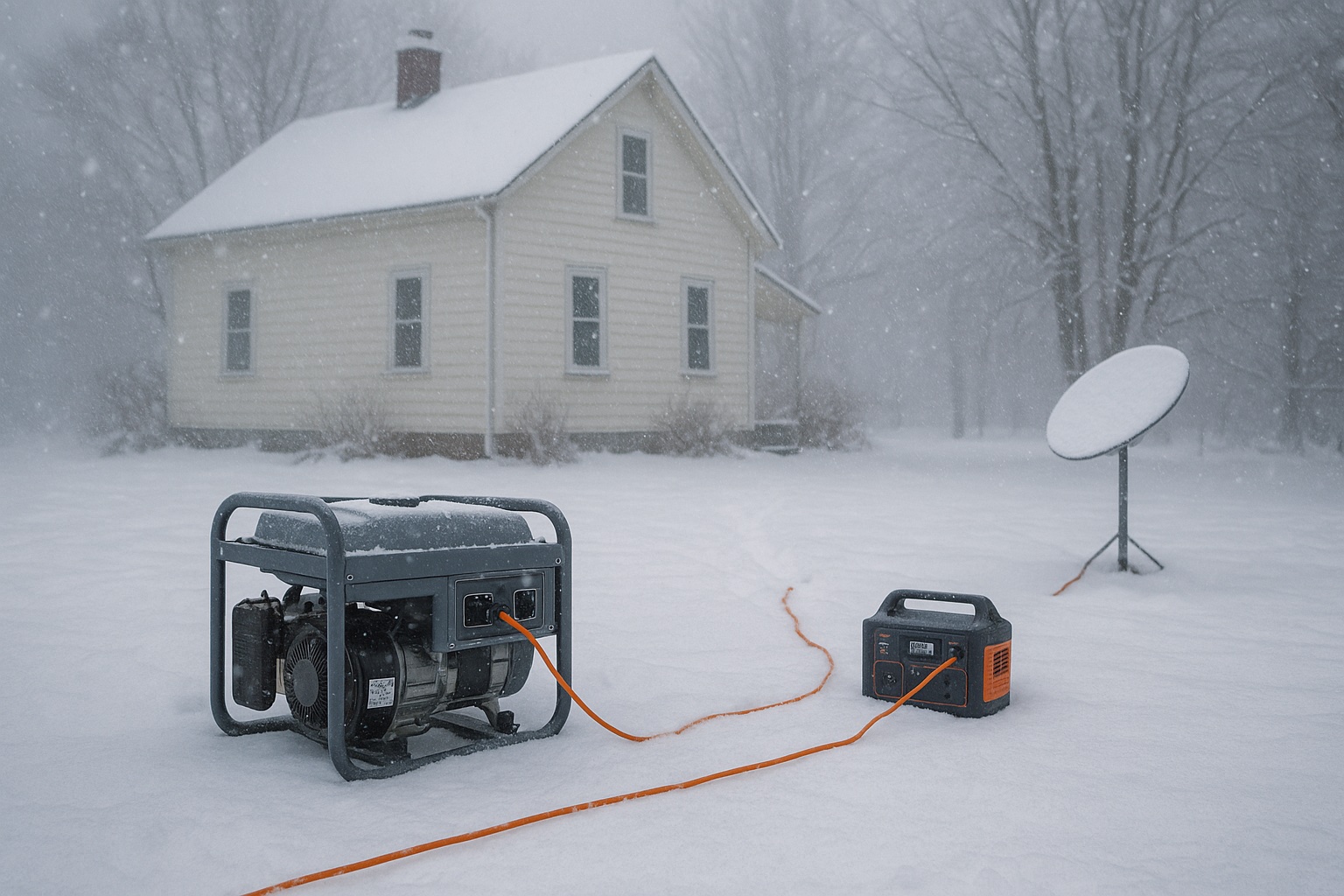
Rather than relying on a single solution, many rural homeowners are finding success by combining multiple small, reliable backup options.
Portable Battery Power for Essentials
Portable battery systems can quietly and safely power essential equipment such as internet hardware, computers, monitors, lighting, televisions, and medical devices like CPAP machines.
These systems are easy to recharge when power returns and do not require fuel, ventilation, or permanent installation.
Keeping Connectivity Alive
By dedicating battery backup to internet and work equipment, rural professionals can remain connected even during multi-day outages. This can mean continuing to work, communicate, or access emergency information when others are completely offline.
Using Generators Strategically
Generators can still play an important role, particularly for higher-load systems like well pumps, sump pumps, refrigeration, and heating support equipment.
Instead of running everything at once, generators are often most effective when used in short, controlled cycles—pumping water, recharging batteries, or supporting heavy loads—while batteries handle quieter, continuous needs.
Simple Preparation Makes a Big Difference
Surviving a rural power outage doesn’t require a full solar or whole-home battery system to get started. Small steps can dramatically improve resilience.
Understanding which systems are critical, knowing how much power essential devices actually need, testing backup equipment before storm season, and keeping instructions and supplies accessible can all reduce stress during an outage.
Most importantly, it helps to understand how your home behaves when the power is off—before you are forced to learn during a storm.
Planning Ahead Reduces Stress Later
Rural outages are often longer and less predictable than urban ones. Preparation isn’t about fear—it’s about control. Knowing that you can pump water, flush toilets, stay warm, and remain connected changes the entire experience of a power outage.
For many rural homeowners, a thoughtful combination of generators, portable batteries, and efficient load planning offers a flexible and affordable way to stay functional when the grid goes down.
Future articles will explore these systems in more detail, including safe electrical integration, load management, and long-term resilience planning for rural Ontario homes.
Power outages are an unavoidable reality for many rural properties, but how disruptive they become depends largely on preparation. Taking the time to understand your home’s critical systems, explore layered backup options, and plan ahead can make outages far more manageable—and far less stressful. If you’re unsure where to start or want to sanity-check your current setup, having a knowledgeable professional walk through your options can help you make informed, practical decisions that fit your home, your work, and your lifestyle.