One of the biggest advantages of modern solar panels is how little maintenance they require. With no moving parts and durable construction, a well-installed solar array can operate reliably for 25 years or more. That said, a bit of basic care and awareness—especially in Ontario’s snowy climate—can help keep your system performing at its best.
In this guide, we’ll walk through practical maintenance tips for solar panels in Eastern Ontario, including what you can safely do yourself, when to call a professional, and how our winters affect performance.
1. The Good News: Solar Panels Are Mostly Low Maintenance
For most homeowners, solar panels require very little day-to-day attention. Once properly installed and inspected, your system should:
- self-clean to a large extent through rain and snowmelt
- run quietly with no moving parts to wear out
- be monitored automatically through an online portal or app
- continue producing energy for decades with only occasional checks
Most of your “maintenance” will simply involve keeping an eye on production data and doing a quick visual check now and then.
2. Seasonal Considerations in Ontario
Eastern Ontario’s climate brings four distinct seasons—each with its own small impact on solar. Here’s what to expect.
Spring: Panels often perform very well in cool, sunny conditions. This is a good time for a quick visual inspection from the ground to check for debris, branches, or visible damage after winter.
Summer: Long days mean strong production, but high temperatures can slightly reduce panel efficiency. Make sure surrounding trees haven’t grown to the point where they cast new shadows across your array.
Fall: Falling leaves can collect around or on lower edges of ground mounts or flat roofs. A gentle cleanup (when safe to access) can prevent buildup and ensure proper water drainage.
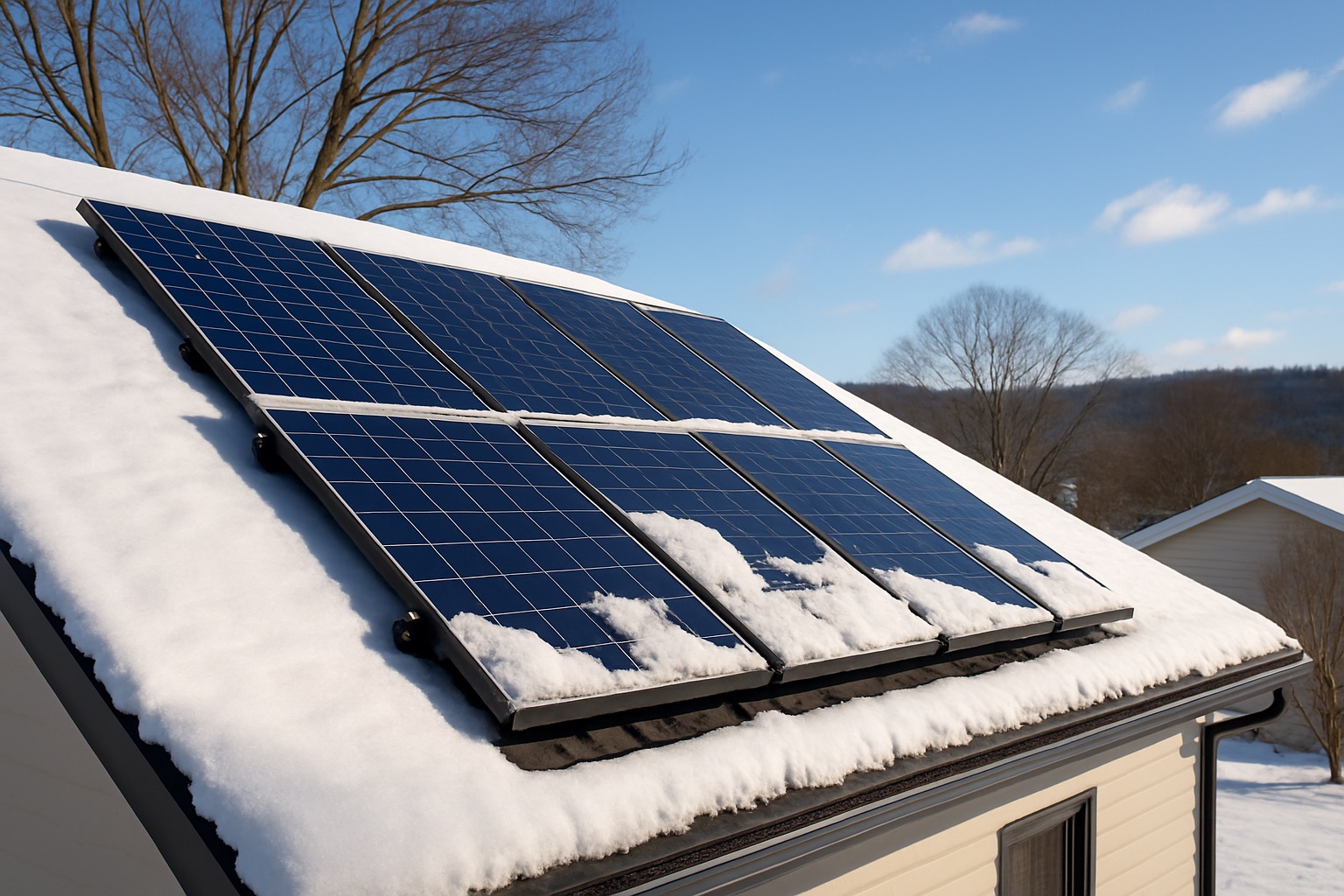
Winter: Snow, ice, and shorter days reduce production—but this is expected and factored into system design for Ontario. In most cases, the safest approach is to let snow melt and slide off naturally rather than trying to clear panels yourself.
3. Snow on Panels: What You Should (and Shouldn’t) Do
It’s normal for snow to cover your panels at times during the winter. Because solar production is lower in winter anyway, the overall impact on your annual energy is usually modest—and production estimates for Ontario already account for typical snow losses.
What you should not do:
- Do not climb onto an icy or snow-covered roof to clear panels.
- Do not use metal shovels, scrapers, or hard brushes on the glass.
- Do not throw salt or chemicals onto the panels.
All of these can create serious safety risks or damage the panels and roof.
Safer options:
- Wait for sun and milder temperatures—dark panels warm up and often shed snow surprisingly quickly.
- If panels are easily reachable from the ground (for example, a low ground mount), a soft, foam-edged roof rake designed for solar may be used very gently.
- Accept that a few snowy days of lower production are normal in Ontario and are already built into yearly output estimates.
If you’re ever unsure, it’s better to leave the snow alone than to risk a fall or damage.
4. Cleaning Panels: When Is It Necessary?
In many parts of Ontario, rain does a good job of keeping panels reasonably clean. However, in some situations (near busy roads, industrial areas, or heavy pollen), panels can accumulate a thin film of dirt over time.
Signs it might be time for a cleaning:
- Noticeable, persistent drop in production that isn’t explained by weather or season.
- Visible buildup of dust, bird droppings, or debris that doesn’t wash away after a few rains.
If cleaning is required, it’s often best to hire a professional—especially for pitched or elevated roofs. Where safe access is possible, panels are typically cleaned using:
- soft brushes or squeegees
- clean water (often deionized) without harsh chemicals
- careful technique to avoid scratching the glass or damaging wiring
Avoid pressure washers, abrasive pads, and detergents not specifically approved for solar panels.
5. Keep an Eye on Your Monitoring System
Most modern solar systems include online monitoring through a web portal or smartphone app. This is one of your best “maintenance tools.” By checking in occasionally, you can:
- compare current production to past months or years in the same season
- spot sudden drops in output that might indicate an issue
- see if one string, inverter, or micro-inverter is underperforming
Short-term dips during cloudy periods or winter are normal. What you’re looking for is a persistent change that doesn’t match weather or season.
6. Visual Checks You Can Do from the Ground
Without climbing on the roof, you can still perform occasional visual checks from the ground or a safe vantage point:
- Look for obvious physical damage, such as cracked glass or panels out of alignment.
- Check that conduit and visible wiring still appear secure and undisturbed.
- Make sure no new objects (antennas, vents, or tree branches) are casting heavy shade.
If you notice anything unusual, it’s a good time to call your installer or a qualified electrician for a closer look.
7. When to Call a Professional
Reach out to a professional solar or electrical contractor if you notice any of the following:
- Sudden or unexplained drops in production that last more than a few days.
- Visible physical damage or loose components.
- Repeated inverter error messages or warning lights.
- Water leaks or roof concerns near the mounting area.
A licensed installer can safely inspect the array, test the electrical components, and complete any required repairs or warranty work.
8. Protecting Your Investment Over the Long Term
A well-installed solar system in Ontario is designed to handle our winters, summers, and everything in between. The best way to protect your investment is to:
- have it installed and inspected by qualified professionals
- keep an eye on monitoring data and seasonal performance
- avoid risky roof access during snow, ice, or high winds
- schedule periodic professional check-ups if recommended by your installer
With this approach, most systems run quietly in the background, lowering your electricity costs year after year with very little hands-on maintenance.
Need Help with Solar Maintenance or a System Checkup?
If you have questions about your solar system’s performance, are concerned about winter impacts, or are considering adding solar to your home in Eastern Ontario, our team can help. We have hands-on experience with local weather, roof types, and electrical systems across the Ottawa Valley.
Contact us today to discuss your solar project, schedule a system review, or explore adding solar and battery backup to your home.