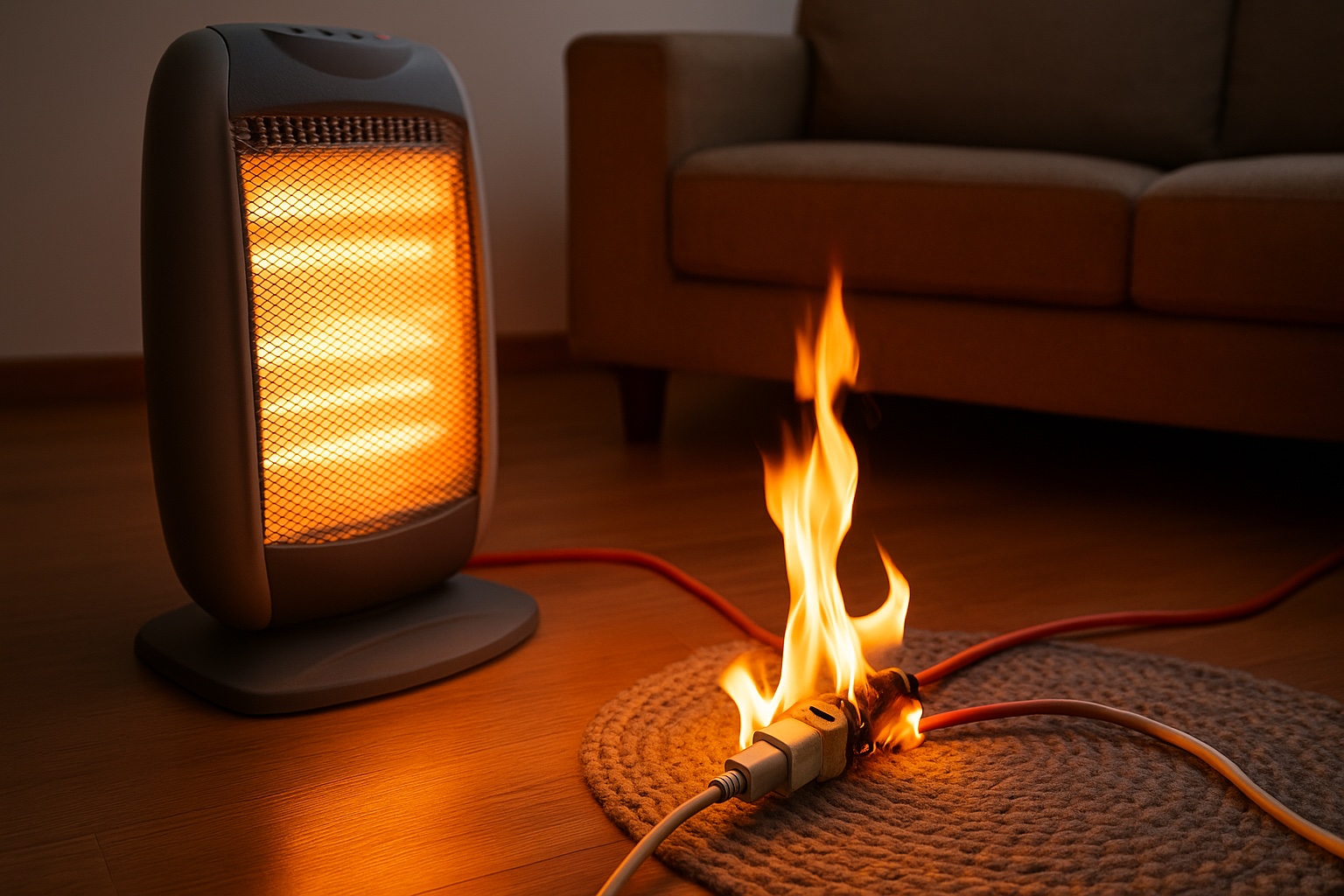
Extension cords are incredibly common — especially during the winter season when homeowners plug in Christmas lights, inflatables, space heaters, block heaters, and other temporary loads. But what many people don’t realize is that extension cords are among the leading causes of household electrical fires in Canada. Used incorrectly, they can overheat, melt, shock, or ignite surrounding materials.
This video offers a powerful demonstration of why extension cords must be used with caution:
Below are the most important extension cord safety tips for Ontario homeowners to follow — especially in winter when cords are more heavily loaded and more frequently used outdoors.
Never Use Extension Cords for Space Heaters
Space heaters draw a large amount of current (often 12–15 amps) and are one of the most dangerous devices to plug into an extension cord. Most cords — even heavy-duty ones — can overheat quickly under this load.
- Always plug space heaters directly into a wall outlet.
- Keep heaters away from furniture, curtains, and bedding.
- Use only heaters with automatic tip-over and overheat shutoff.
If your outlet isn’t conveniently located, it’s better to install a new receptacle than to rely on temporary wiring.
Check the Cord Rating Before Plugging Anything In
Extension cords have different gauges, amperage ratings, and purposes. Using the wrong type can cause overheating, melting, or fires.
- Indoor cords: Light-duty, not weather-resistant, and easily damaged.
- Outdoor cords: Rated for moisture, abrasion, and cold temperatures.
- Heavy-duty cords: Use thicker wire (12–14 gauge) for higher loads.
Always match the cord to the device’s power requirement. High-wattage tools, heaters, pumps, and appliances require heavy-duty cords.
Never Run Extension Cords Through Doors, Windows, or Walls
Pinched cords can break down internally, creating hidden shock and fire hazards. Winter weather — especially freezing temperatures — makes insulation brittle and even more prone to cracking when crushed.
If you need a permanent connection, have an electrician install an outdoor-rated outlet or weatherproof connection.
Protect Outdoor Connections from Moisture and Snow
Winter brings melting snow, ice buildup, and condensation — all of which can cause GFCI trips, shorts, or corrosion. Outdoor extension cords must:
- Be rated for outdoor use
- Be connected using weatherproof covers
- Never sit in puddles, snowbanks, or gutters
- Be unplugged and inspected after storms or heavy snow
If a cord feels warm, discoloured, stiff, or brittle, replace it — do not continue using it.
Avoid Daisy-Chaining Extension Cords or Power Bars
Plugging multiple cords or power bars together increases resistance and heat buildup. It also creates unpredictable load conditions that can exceed the cord’s rating.
If your device’s cord does not reach, use a properly rated single heavy-duty extension cord or relocate the device.
Christmas Light Safety Tips (Indoor & Outdoor)
Holiday lighting dramatically increases seasonal electrical risks. Follow these guidelines for safer decorating:
- Use LED lights instead of incandescent — they stay cool and draw far less current.
- Ensure outdoor lights and cords are weather-rated.
- Don’t overload a single outlet with multiple light strings.
- Use outdoor GFCI outlets for all exterior lighting.
- Inspect lights for cracked sockets, frayed insulation, or damaged plugs.
Remember: decorative lights still draw current. Overloaded cords + snow + moisture = a recipe for trouble.
Extension Cords Are for Temporary Use Only
One of the biggest takeaways from the video is this: extension cords are not meant to be permanent wiring. If you need a long-term solution, the safest approach is to install the outlet, circuit, or connection you truly need.
Permanent wiring should always be done by a licensed electrical contractor — not by running a cord under a rug for months at a time.
When to Call a Licensed Electrician
You should contact a licensed electrician if:
- You rely on extension cords year-round
- You use multiple cords for heaters, freezers, or pumps
- You need outdoor outlets added or upgraded
- Your breakers frequently trip under winter loads
- You notice warm outlets, buzzing, or flickering lights
These are often signs that your electrical system needs attention — not more cords.
Stay Safe This Winter
Extension cords are incredibly useful, but they must be used with caution — especially in Ontario’s harsh winter climate. Snow, ice, high loads, and temporary holiday wiring increase risk, but with proper safety habits, you can dramatically reduce the chance of overheating or electrical fires.
Need safer outlet placement, outdoor wiring, or additional circuits installed? Our licensed team can help you upgrade your home so you don’t have to rely on unsafe temporary solutions.
Contact Smart Electric Services today for a safety inspection or to install the outlets and circuits you actually need.