Farms in Eastern Ontario face unique energy challenges that residential properties simply don’t encounter. From large motors and irrigation pumps to refrigeration systems, automated equipment, and multiple outbuildings spread across wide areas, farms depend on reliable electricity to run daily operations. Yet farmers consistently report that energy concerns are among their top operational challenges—especially in rural regions where outages and rising costs continue to increase.
The Ontario Federation of Agriculture notes that energy issues remain a high priority for agricultural operations, affecting efficiency, production, and long-term planning. As the industry modernizes, many farms are turning to smart electrical upgrades, solar power, and energy-storage solutions to reduce risk and stabilize costs.
Why Energy Reliability Matters So Much on the Farm
Unlike typical households, farms rely on electricity for critical systems:
- Water pumps and irrigation systems
- Barn ventilation and environmental controls
- Milking equipment and dairy refrigeration
- Heat lamps for livestock
- Well pumps for remote buildings
- Security and automation systems
A power interruption at the wrong moment can spoil food, harm livestock, freeze pipes, or halt production. Many farmers also operate in rural areas where storms, high winds, or downed trees cause more frequent outages compared to urban centres.
Backup Power: Preparing for Outages Before They Happen
Whether due to storms, grid congestion, or infrastructure aging, outages are disruptive and costly. A well-designed backup system ensures essential loads remain powered—even during prolonged outages.
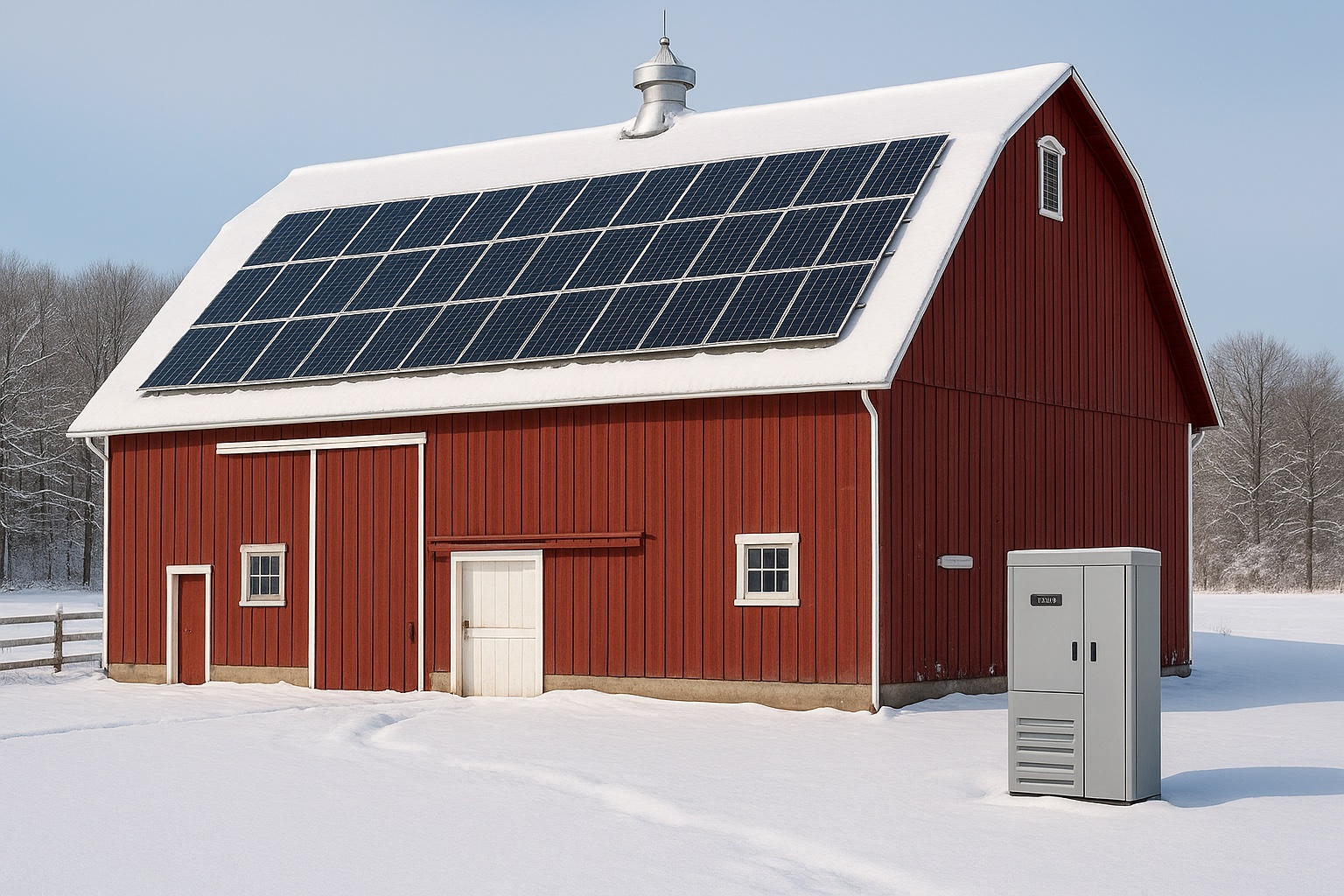
- Solar + battery systems: Ideal for barns, water pumps, security systems, and critical loads.
- Hybrid systems: Combine solar, batteries, and generators for deep resilience.
- Critical load panels: Ensure essential farm equipment stays powered first.
- Remote monitoring: Keep track of battery levels, solar production, and outages in real time.
For remote or seasonal buildings—such as pump houses, well shacks, or maple syrup operations—solar micro-grids offer reliable energy without requiring new power lines or fuel deliveries.
Rising Electricity Costs & Demand Charges
Ontario farms often operate powerful equipment that draws large amounts of electricity at once—triggering peak demand charges and elevated monthly utility bills. As energy prices continue to increase, farms are seeking ways to take control of their electrical consumption.
- Solar power: Generates electricity during long summer days when farm consumption peaks.
- Battery storage: Stores excess energy and offsets peak-use periods.
- Smart load management: Automatically shifts certain loads to off-peak times.
- Panel upgrades: Ensure electrical systems can support modern high-efficiency equipment.
Investments in energy efficiency not only lower immediate costs—they also make the farm more resilient to future price fluctuations.
Preparing for Electrification in Agriculture
As agriculture evolves, many farms are adopting energy-intensive technologies such as:
- Electric tractors and utility vehicles
- Automated feeding and climate-control systems
- EV chargers for fleet vehicles
- High-efficiency electric heating and water pumping
These advancements improve productivity but place new demands on existing electrical systems. Farms that prepare today—with proper wiring, service upgrades, and flexible system design—will avoid costly retrofits down the road.
Seasonal Challenges: Winterization and Harsh Outdoor Conditions
Eastern Ontario winters bring unique energy risks: frozen water lines, extreme cold, snowstorms, and rapid temperature shifts. Energy systems must be built to withstand these conditions—especially in outbuildings that may not be insulated or heated.
- Cold-weather rated wiring and equipment
- Weather-sealed outdoor enclosures
- Battery systems tolerant of low temperatures
- Backup power for heat lamps, pump houses, and livestock shelters
A properly designed electrical system ensures reliable operation year-round, regardless of weather.
Remote Buildings, Barns, and Outposts
Running overhead or underground hydro lines to distant barns can be extremely expensive—and sometimes impractical. Solar micro-grids and battery banks provide a cost-effective solution for:
- Maple syrup shacks
- Equipment sheds
- Pasture shelters
- Remote water systems
- Seasonal cabins or hunt camps
These systems operate independently of the grid, reduce fuel reliance, and increase flexibility for farm expansion.
What to Look for in a Farm Electrical Contractor
Choosing the right electrical contractor is crucial to ensuring safety, reliability, and code compliance. Farmers should look for teams with experience in:
- Agricultural electrical systems and high-load equipment
- Sizing and designing backup power solutions
- Solar and battery installations for rural environments
- Weatherproofing and winter-resilient electrical design
- Long-distance trenching, feeders, and multi-building layouts
Working with a licensed, knowledgeable team ensures the system will meet the farm’s needs today—and be ready for what’s coming tomorrow.
Ready to Make Your Farm More Energy-Resilient?
Whether you’re planning a solar installation, upgrading barn wiring, adding backup power, or preparing for new equipment, our team can help you design a safe, durable, and efficient electrical system tailored to your farm.
Contact Smart Electric Services today to book a consultation and explore energy solutions built for Ontario farmers. Plan through the winter and get it done in Spring.